SagaLabs - Welcome to the SagaLabs Blog
A warm welcome to this new blog about SagaLabs, where we share our thoughts on how we have developed SagaLabs for various training purposes, how we plan and conduct training in SagaLabs – challenges we face and solutions we test and general aspects and learning about Cyber Ranges.
What is SagaLabs?
We should probably start with a little introduction to the platform itself, SagaLabs is a cloud-based lab environment for Purple Teaming, otherwise known as a Cyber Range. It was built by the Association for Danish Cyber Alumni for Purple Team style training and exercise’s for the members of the association and more recently it has been utilized for hosting several successful CTF’s (Capture the flag).
The Association for Danish Cyber Alumni – Foreningen for Danske Cyber Alumner – is an association for people who has been discharged upon successful completion of the Cyber Enlistment of the Danish Armed Forces. You can read more about the associate here: https://fdca.dk/
Danish organization but the blog is in English?
So why is this blog in English – since the Association is Danish – and why this blog at all?
There are a good deal of cyber security training labs and ranges out there for various purposes and objectives. However, there are not yet that many fora for exchanges of ideas and experiences regarding good practices for the build and use of Cyber Ranges. With this blog we would like to go first and hopefully encourage others to begin to share more on this topic. This is why we have decided to write in English as it will reach the broadest amount of the community.
We love the open source mindset over at SagaLabs and FDCA, and this is one of our steps in showing our commitment to the open source world.
What would we like to share here?
You can expect to read about the following awesome areas of content:
- SagaLabs Project Updates
- Technical and operational insights
- Psychology around learning utilizing SagaLabs and Cyber Ranges
SagaLabs Project Updates
We would like to continuously update the community on the state of our project – SagaLabs – its current build and use and considerations going forward. Even if SagaLabs was build for a specific educational purpose and later adapted for specific training purposes in the setting of our association, we see many new adaptions and options for expanding the usability of the range in front of us.
Technical and operational insights
Diving a bit deeper, we foresee sharing further details about the technical build, including some of the underlying thoughts on architecture and design – perhaps even principles – and how we strive to establish coherence between our build and the broader vision for SagaLabs. With discussion and questions, like what good the build can do for the way we want to train and exercise, how to make a range both effective and adaptable for different contexts, simplicity and realism from a technical point of view and what this means for orchestration.
All this technical stuff will include us sharing details about the orchestration, automatization, different lab-infrastructures, tooling, frontends for various roles related to the labs. Whatever the imagination allows, that could be really interesting for the exchange on views and insights with other technical lab-enthusiasts.
Psychology around learning utilizing SagaLabs and Cyber Ranges
One of the biggest areas for learning we have experienced so far is around how to generate the most value from learning opportunities within SagaLabs. Gamification of learning is a very big topic and it has such huge value when applied to Cyber Ranges.
The current version SagaLabs is built for the purpose of experiential learning, which is a shared purpose for most of the Cyber Ranges we know of. So, what does good experiential learning based on Cyber Ranges look like and how can the design of the Cyber Range help to leverage high quality experiential learning. These just a few of the many questions we would really like to explore on this blog.
The learning design covers all from setting learning objectives, what scenarios and use-cases to create and deploy into learning plans, setting up training events, how to create context – not only in the range as such but also in the surrounding physical domain, blending learning formats and creating external injects to support the dynamics played out ‘hands on’ in the range itself.
We are aware of a few initiatives in the community – aside of course the state of the art commercial cyber ranges out there – and would be happy for anyone working with such a Cyber Range to get in touch, we would love to share experiences beyond the format of the blog. This can be done by reaching out via e-mail to kontakt@fdca.dk or direct message on our LinkedIn page.
Our future posts will be released via www.sagalabs.dk and shared via LinkedIn.
If you are an enthusiast or just curious on the topic, please do press follow or feel free to share or comment.
Upcoming posts will include: “The story behind SagaLabs”, “What’s out there in terms of Cyber Ranges”, “What does SagaLabs look like?” and “How we set-up and execute our training events”.
From there, we hope the posts will spawn and facilitate some inspirational exchanges under way. Stay tuned.
References
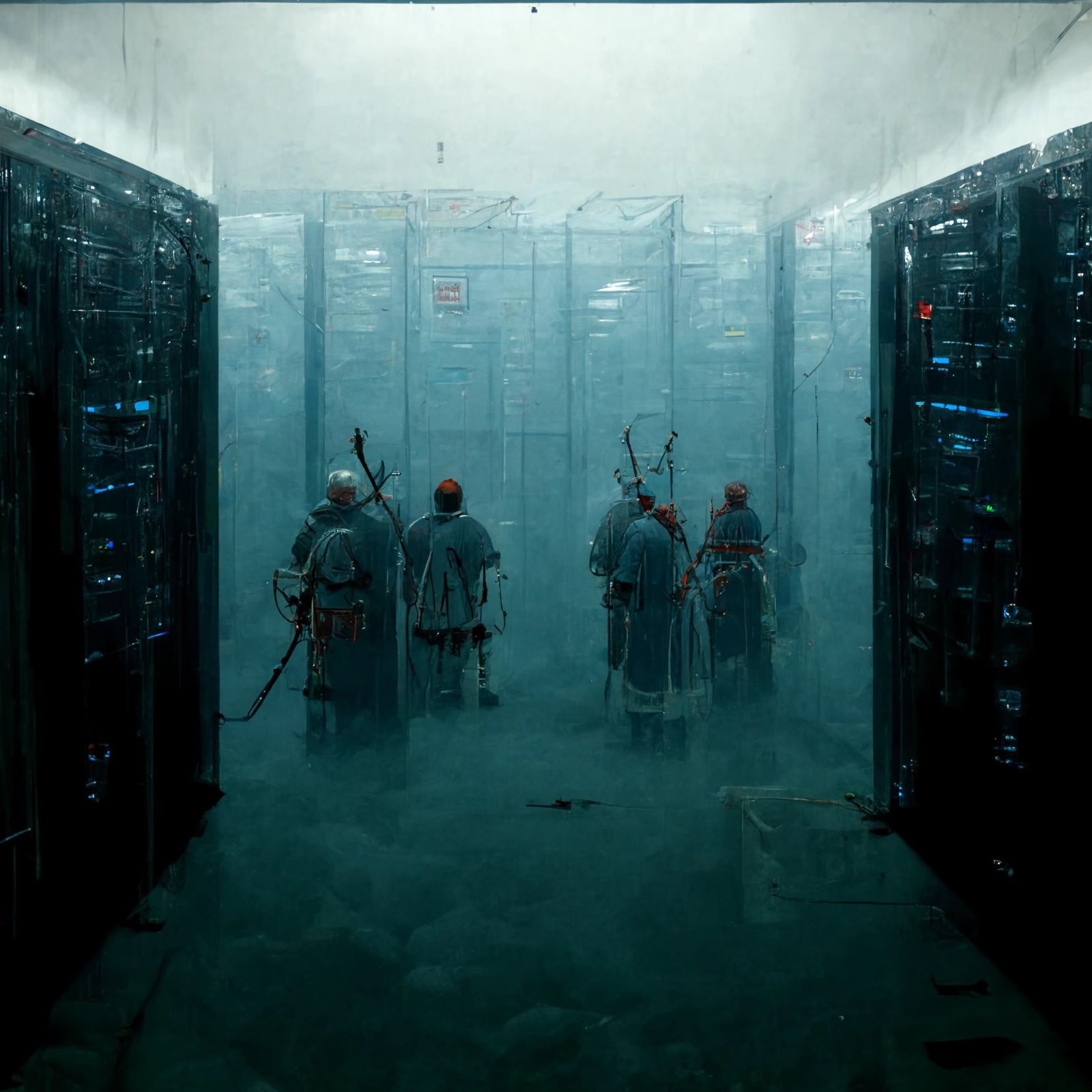
- Pictures generated by MidJourney
 Spotlight - Nichlas Falk